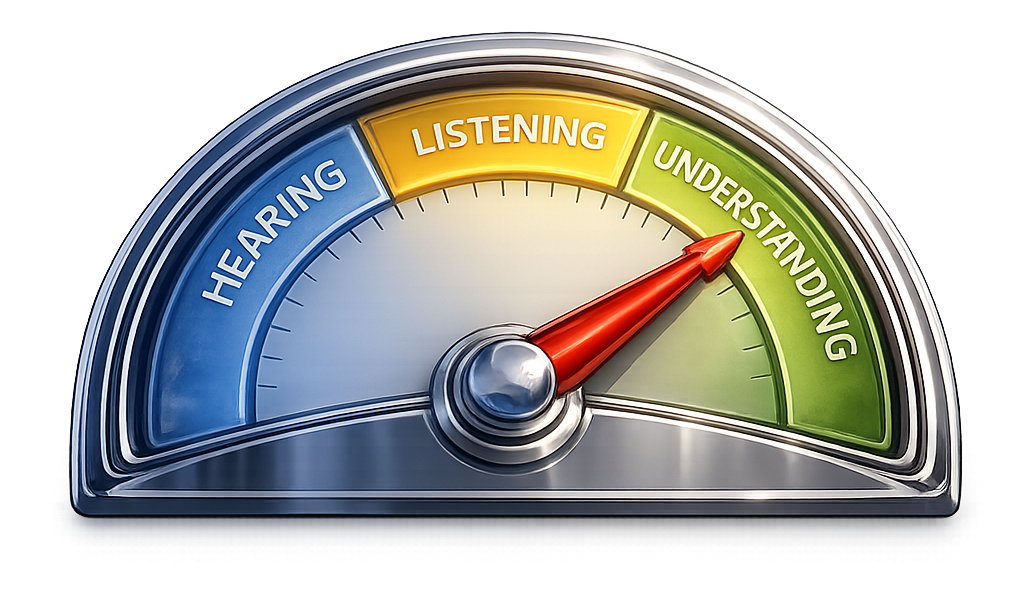
Successful Salespeople Listen More Than They Speak
Most buyers are overwhelmed with sales messages, presentations, and pitches. What they rarely experience is a salesperson who truly listens. Yet, strong listening skills remain one of the most powerful and underdeveloped advantages in professional selling.
Successful salespeople understand that listening is not passive or optional. It is a deliberate, strategic discipline that shapes every successful customer relationship.
Listening Reveals What Really Matters
Customers often begin conversations by describing symptoms: slow processes, rising costs, missed deadlines, or internal frustrations. Skilled listeners know these are rarely the true problems.
By listening carefully and asking thoughtful follow-up questions, top performers uncover the underlying risks, priorities, and business pressures driving the situation. This deeper understanding allows them to position solutions that truly matter to the customer.
Listening Builds Trust and Credibility
Trust is earned long before a proposal is presented. When customers feel heard, they feel respected and valued. They recognize that the salesperson is focused on their success, not just the transaction. Over time, this creates credibility that no marketing message or product brochure can replace.
In complex B2B environments, trust is often the deciding factor.
Listening Improves Sales Effectiveness
Strong listeners qualify opportunities more accurately. They understand decision authority, budget realities, internal politics, and implementation concerns. As a result, they pursue better opportunities and avoid costly misalignment.
They also present more effectively. Because they understand the customer s language, priorities, and risks, their recommendations feel relevant and practical rather than generic.
Listening Reduces Resistance and Price Pressure
Many objections stem from poor listening. When buyers feel misunderstood, they push back. When they feel heard, they collaborate. Reps who listen well spend less time defending price and more time reinforcing value, outcomes, and long-term impact.
- Listening shifts conversations from cost to investment.
- Listening strengthens long-term relationships.
- Customers remember how you make them feel.
Salespeople who consistently listen well remember challenges, preferences, and goals. They anticipate needs, follow up thoughtfully, and adapt as situations change. This builds loyalty that extends well beyond a single transaction.
Listening is not a soft skill. It is a performance skill.
It improves discovery, strengthens relationships, increases close rates, and protects margins. Most importantly, it positions you as a trusted advisor rather than a transactional vendor.
The best salespeople do not win by talking and pitching. They win by speaking less and listening effectively.