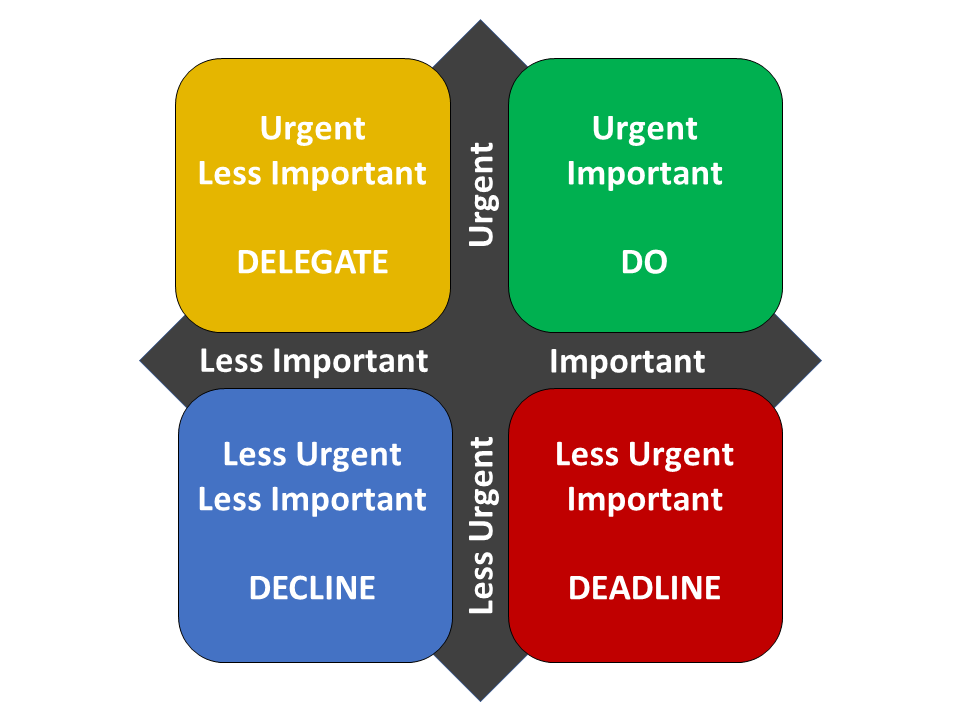
Small improvements in how you allocate your time can produce massive results.
Small improvements in how you allocate your time can produce massive results.
March 23, 2026
Managing time in sales is rarely just about efficiency. It is about investing attention where it produces the highest return. Yet many sales professionals organize their days around beliefs that feel responsible, but ultimately dilute momentum, weaken focus, and reduce impact. Here are three myths worth challenging.
Urgency and Importance Are the Same Thing
Urgent tasks scream while the important tasks wait. Most sales professionals spend their days responding to what is loudest, inbound emails, last-minute requests, reactive conversations, while the high-value work of prospecting, building a solid pipeline, strengthening executive relationships, and developing account strategy gets deferred indefinitely. Urgency is external pressure. Importance is aligned to outcomes. The discipline of separating the two, and scheduling time for important work before the urgent noise fills the day, separates average performers from elite ones. Budget a few hours of each day or week to handle those unexpected tasks that seem to come out of nowhere.
A Full Calendar Equals a Productive Day
Back-to-back meetings feel like momentum. They are not. Activity is not the same as progress. When every hour is blocked, there is no room to think, prepare, or follow up with precision. The top performers in B2B sales protect open time deliberately using it to research accounts, craft personalized outreach, and advance deals strategically. A packed schedule signals business. A strategic schedule signals intention. Audit your calendar this week: how many of those meetings directly move a deal forward or protect a key relationship? If the answer is fewer than half, the calendar is managing you, not the other way around.
All Accounts and Prospects Deserve Equal Attention
Equal treatment sounds fair. In sales, it is a path to mediocrity. Not every prospect has the same potential, urgency, or fit for your solution. Spreading energy equally across a bloated schedule dilutes focus and slows the best opportunities. The highest-return behavior is ruthless qualification, identifying which accounts are most likely to close, most likely to expand, and most aligned with your ideal customer profile. Prioritize depth over breadth. One deeply nurtured, well-researched opportunity almost always outperforms five shallow, unfocused ones. The Pareto Principle applies to most salespeople. 20% of your accounts generate 80% of your business. Protecting your attention is protecting your quota.