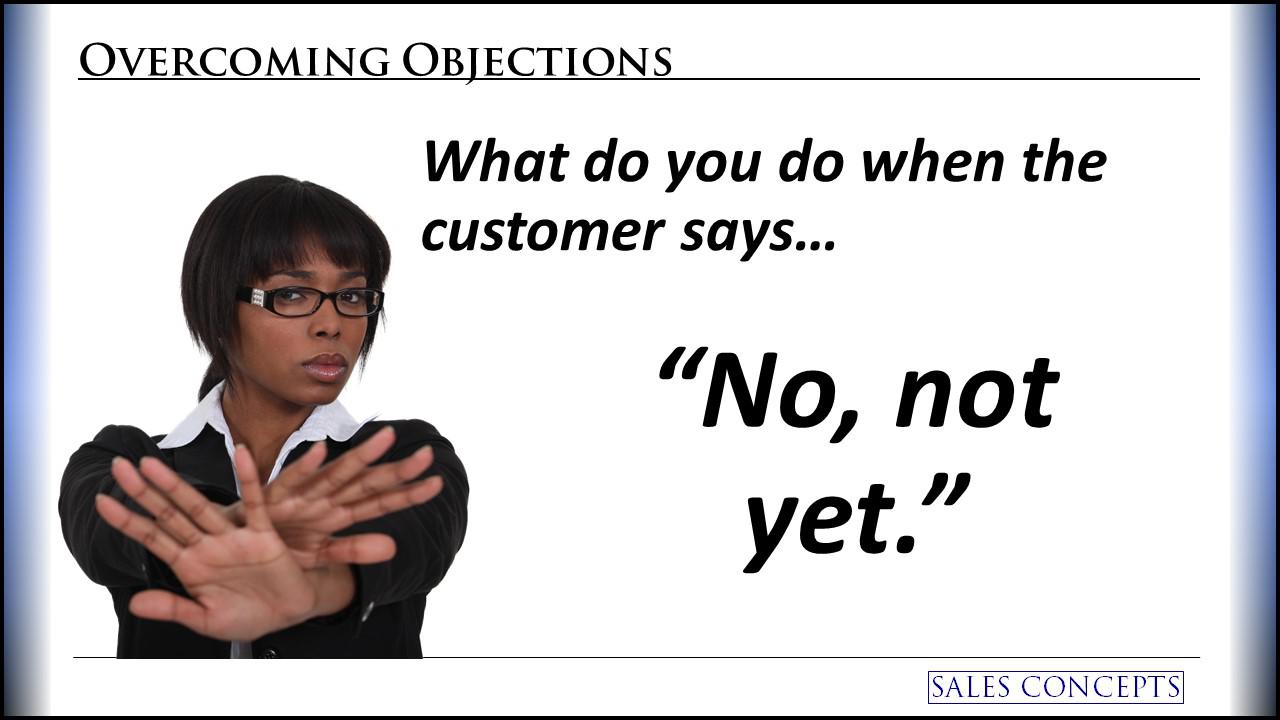
5 Myths About Objections And What They Really Mean
If you have been in sales for more than five minutes, you have heard objections like:
- We do not have the budget.
- Now is not a good time.
- You are too expensive.
- We are happy with our current supplier.
- And many more!
If you are like most salespeople, you have felt that little surge of pressure: Here we go… I have to overcome this. But what if that mindset is actually making objections harder?
In many selling situations, objections are not barriers; they are signals. They are clues about what the buyer needs to move forward with confidence. Unfortunately, a few common myths lead salespeople to misread those signals and respond in ways that create friction instead of progress.
Here are five myths worth rethinking.
Myth 1: If they are objecting, they are not interested.
Often, objections mean the buyer is engaged. Uninterested prospects usually do not object; they disappear. Objections often translate to: I am listening, but I am not yet confident.
Myth 2: You need the perfect rebuttal.
Objections are rarely solved by clever wording. They are solved by diagnosis. Most objections are symptoms of something deeper: risk, internal politics, competing priorities, or uncertainty. Your best response is usually a question, not a counterargument.
Myth 3: Price is the real objection.
It is too expensive is frequently shorthand for I am not sure this is worth it, or I am unable to justify this internally. Before you negotiate, make sure the value and outcomes are clear and tied to what they care about.
Myth 4: We must handle every objection immediately.
Some objections are premature. Rushing to fix them can create friction or trigger defensiveness. Strong reps know when to address a concern now, and when to build context first, then return to it with better alignment
Myth 5: If I answered it once, it should be resolved.
Objections often repeat because different stakeholders have different concerns. The same objection may require different proof: ROI, logic, a pilot plan, an implementation roadmap, or references, depending on who is asking.
Objections are not something to defeat. They are information to explore. When you treat objections as a way to reduce risk and build confidence, they stop feeling like barriers or interruptions and start becoming one of the most productive parts of the sales process.