The most expensive mistake salespeople make and how to avoid it.
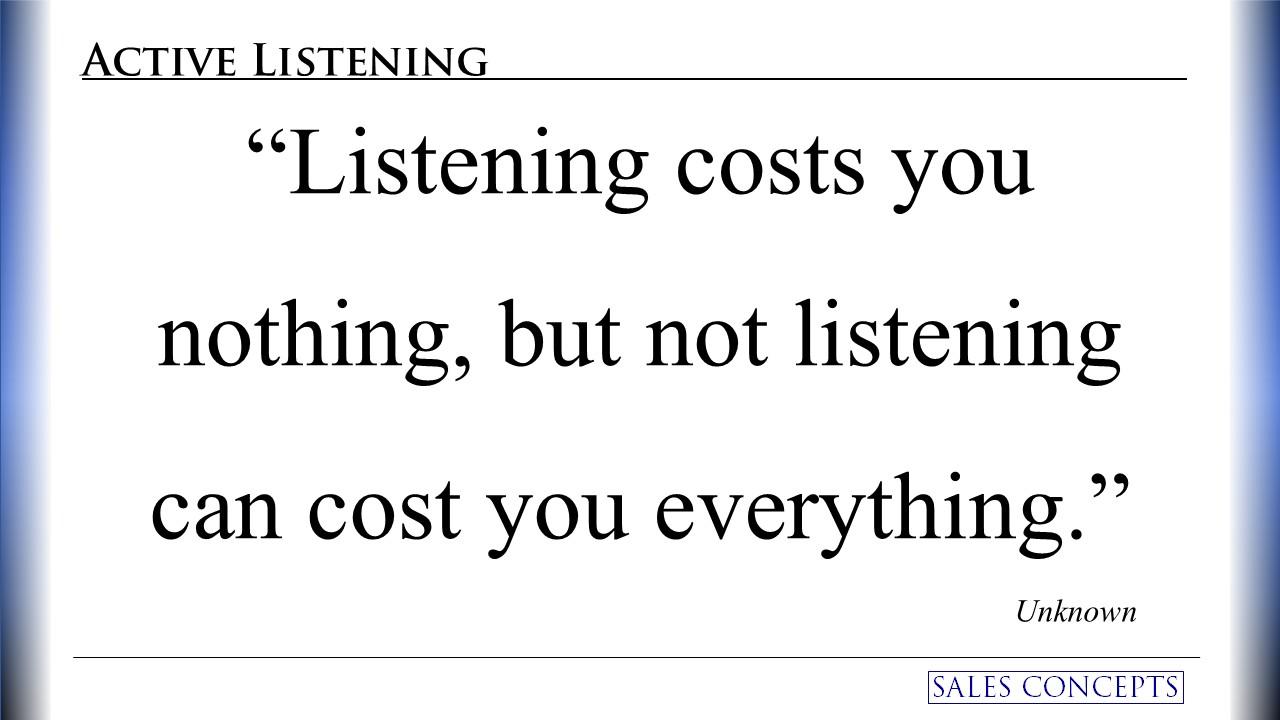
Think about the last training you attended on how to listen. Can you remember one? If not, you are not alone.
Most salespeople have been trained extensively on how to talk: how to open a call, handle objections, deliver a pitch, close a deal. Almost none have received formal training on how to listen. We treat listening as something we already know how to do, the same way we breathe or walk. But listening at a professional level, the kind that uncovers real needs and builds trust, is a skill. And like any skill, it must be learned and continuously practiced.
Research consistently shows that people rate their own listening ability far higher than it actually is. Studies on listening comprehension find that we retain only a fraction of what we hear within just a few hours, and our confidence in our listening skills rarely matches our actual performance. In sales, that gap is expensive. A prospect mentions a budget constraint in passing, and we miss it because we were already thinking about our next question. A customer hints at frustration with a competitor, and we talk right past it on our way to a feature we want to highlight.
If listening well doesn't come naturally, and most of us were never taught it, where do we start? Here are five practical ways to sharpen this skill.
1. Stop preparing your response while the other person is talking. This is the single biggest listening killer in sales conversations. If you're mentally drafting your next question or rebuttal, you're not actually listening. Let the thought go and stay present in their sentence.2. Listen for what is underneath the words. People often signal priorities, concerns, or hesitations indirectly. A comment like we have had mixed results with vendors before is not small talk. It is data. Train yourself to notice these moments and follow up on them directly.3. Use silence on purpose. After a prospect finishes a thought, resist the urge to fill the space immediately. A short pause often invites them to add the detail that matters most, the one they were deciding whether to share.4. Confirm what you heard in your own words. Paraphrasing is not just a rapport technique. It is a listening check. If you are unable to summarize what someone just told you, you probably were not fully tracking it.5. Take notes that capture their language, not yours. Write the words and phrases customers actually use. This keeps you anchored to their perspective instead of translating everything into your own framework too early.
These tips do not require new tools or extra time. They require a shift in attention, treating listening as an active skill rather than a passive byproduct of being in the room. The salespeople who consistently outperform their peers are rarely the best talkers. They are the ones who make customers feel truly heard and then genuinely respond to what they were told.