Most Salespeople Sound Exactly the Same. Here is How to Fix That.
Most Salespeople Sound Exactly the Same. Here is How to Fix That.
June 22, 2026
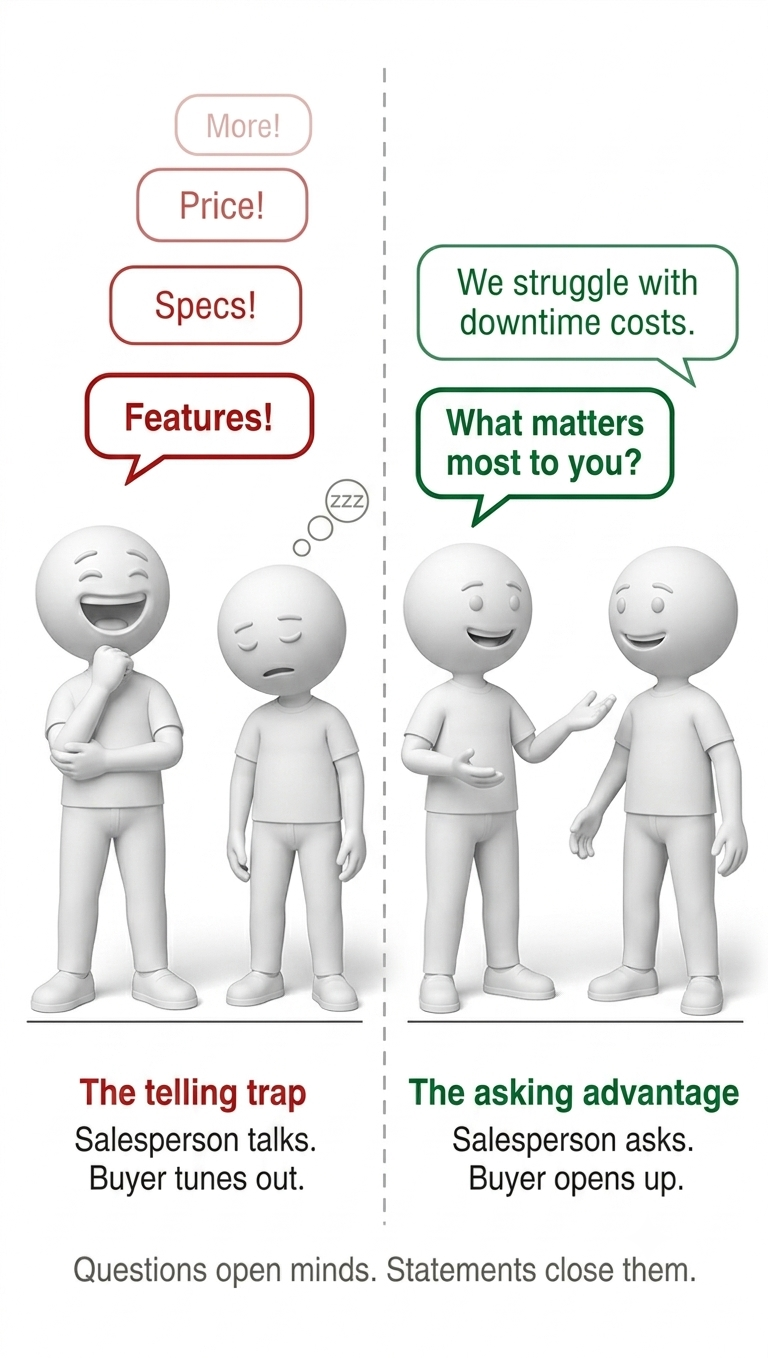
Most salespeople talk far too much and ask far too few questions. The most successful salespeople spend roughly 80 to 90% of a conversation listening and learning, and most of their speaking time is spent asking questions. So, what gets in the way? Here are the top ten reasons salespeople fall into the telling trap, along with practical ways to break out.
1. They rely on assumptions.
Assumptions are the enemy of discovery. When a rep thinks they already know what the customer needs, the conversation is essentially over. The fix: treat every call as if you know nothing. You just might be surprised.
2. They feel too rushed.
The pressure to cover a full agenda pushes questions to the back burner. The solution is simple: prepare two or three great questions before every call and protect time for them.
3. They are not really listening.
You cannot ask a good follow-up question if you were composing your next talking point. Practice being fully present. Hold off on your points and pay attention to what the customer is actually telling you.
4. They do not know what to ask.
Many salespeople have never been trained on questioning strategies. Learning a questioning framework, moving from surface questions through follow-up and insightful questions to closing questions, gives you a reliable questioning structure.
5. They are afraid of the answer.
What if the prospect says the budget is gone, or the decision is already made? Fear of bad news keeps salespeople from asking. Bad news discovered early saves everyone time and preserves your credibility.
6. They do not want to seem uninformed.
Reps sometimes avoid asking because they worry it will make them look unprepared. In truth, thoughtful questions signal expertise and genuine interest. Buyers respect curiosity.
7. They are afraid of looking foolish.
There is no such thing as a dumb question in a sales conversation. Asking for clarification, even on something basic, shows that you care about getting it right. The cost of misunderstanding is far higher than the cost of asking.
8. They lack genuine interest.
If you are not truly curious about the customer's situation, it shows. Develop real interest in the person you are working with, not just in their budget. People can tell the difference.
9. They do not care enough.
Caring is a competitive advantage in sales. Customers who feel cared for are more loyal, more forgiving, and far more likely to refer you.
10. They simply are not prepared.
Impactful questions do not happen by accident. Preparation is the foundation. Review the account, anticipate likely challenges, and write your questions before the meeting. The financial impact is real: lower margin, price pressure, longer sales cycles, and lost deals.