Forecasts Should Change the Future, Not Just Predict It
Most salespeople treat forecasting as an exercise in predicting which opportunities will close and when. They review their pipeline, assign probabilities, update their CRM, and provide management with a number. The question is what happens after you submit your forecast. If the answer is nothing, then you have missed its greatest value.
An objective sales forecast should do more than estimate future revenue. It should identify what is missing from an opportunity and what needs to happen next to improve the likelihood of winning it.
Consider when you confidently forecast a large order for next month. The customer likes the solution, has responded positively to the proposal, and seems eager to move forward. Everything looks promising. But how do you know?
Has the decision maker approved the purchase? Has the budget been allocated? Have all technical requirements been validated? Do the people affected by the decision agree on the solution? Has the customer committed to an implementation date? If those questions remain unanswered, confidence may be based on enthusiasm rather than evidence.
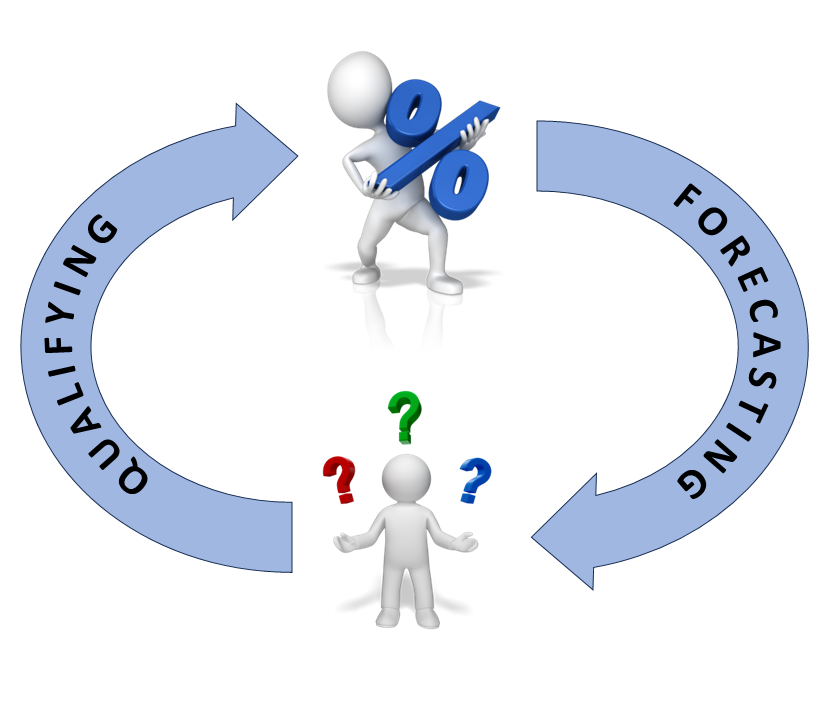
This is where forecasting becomes a qualifying and a selling tool.
Instead of merely reducing the probability of closing, the salesperson can use each missing answer to determine the next action. Perhaps a meeting with the decision maker is necessary. The technical team may need additional information. Perhaps competing priorities must be addressed before the customer can move forward.
The forecast will reveal the remaining work. That enables you to ask better questions and secure meaningful customer commitments.
That distinction is important because forecasting and qualifying are inseparable. Every qualification question provides information that can strengthen a forecast. Every forecasting gap identifies an area requiring additional qualification.
Unfortunately, many salespeople approach forecasting differently. They view it as a reporting obligation, something to complete before the next sales meeting. They rely on instinct, optimism, or assumptions from customer conversations or historical data.
Experienced salespeople can be particularly vulnerable. Years of success may convince them that they can recognize a winning opportunity without verifying the evidence.
Experience is valuable, but it does not turn assumptions into facts.
The solution is to approach every customer interaction with a forecasting mindset. Before each conversation, identify what you need to learn. During the conversation, look for evidence of genuine buying progress. Afterward, evaluate what changed and what remains uncertain.
Most importantly, challenge your conclusions with one simple question. How do I know?
When you believe the customer has funding, how do you know? When you expect a decision next month, how do you know? When you assume your champion can influence the final decision, how do you know?
The purpose is not to eliminate uncertainty. It is to recognize uncertainty early enough to act.
A forecast that predicts a lost sale may be accurate, but it offers little help if the warning comes too late. The best forecasts do not simply tell you what might happen. They help you influence what happens next.